
Sample Handling
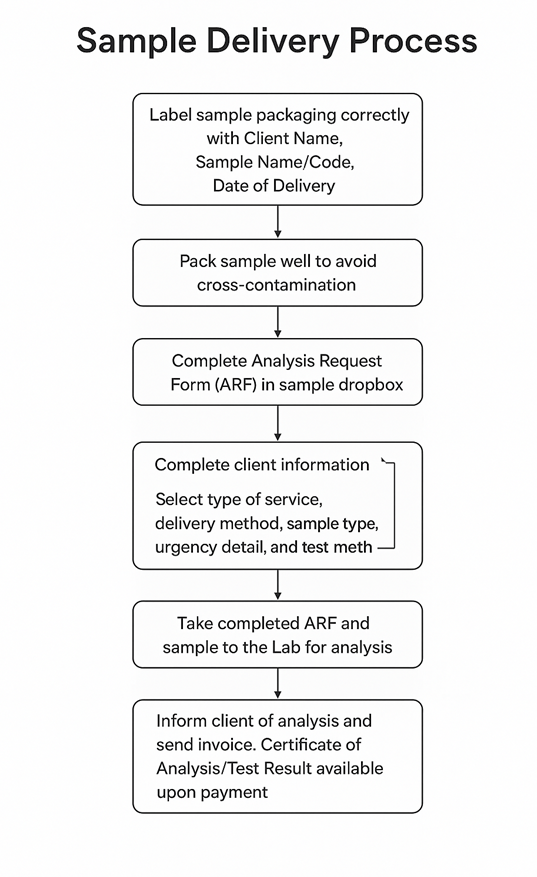
1. Sampling Protocol
Proper sampling is the critical first step in laboratory analysis, ensuring that the collected sample accurately represents the entire batch.
- Representative Sampling: Ensure the sample represents the entire batch. Take the sample from a mixed portion of the product, not just the top layer, to avoid bias and ensure a true representation.
- Optimal Sample Size: The sample size should be large enough to conduct all required tests but not so large that it wastes product. Generally, 100-500g is sufficient for most standard laboratory tests.
- Sanitation: Use clean, sanitized utensils and tools when handling the sample to prevent contamination.
2. Handling and Transport
Proper handling during transport is essential to maintain the sample's integrity, ensuring the results of the analysis are accurate and reliable.
- Temperature Control: If required, use temperature-controlled transport (e.g., refrigerated containers). Use a monitoring device to ensure the temperature remains within the safe range for the specific product.
- Vehicle Cleanliness: Ensure that transport vehicles are sanitized to avoid cross-contamination between different samples.
- Time-Sensitive Transport: Consider specific time limits for transporting perishable goods. Fresh and frozen food samples should be transported and tested as quickly as possible to prevent degradation and spoilage.
3. Storage Conditions
Correct storage conditions are vital for preserving the quality and integrity of the sample before analysis.
- Temperature Control: Some food samples require specific temperature controls for storage, such as refrigeration or freezing, to prevent microbial growth and chemical changes.
- Humidity: Certain products may require specific humidity levels to prevent spoilage or mold growth.
- Cleanliness and Hygiene: Always store samples in a clean, dry, and hygienic environment to avoid any form of contamination from external factors.
Our Affiliates
International standards bodies we work with





National Partners
- Ministry of Trades & Commerce — Trade policy & oversight
- Vanuatu National Statistics Office — National data & statistics
- Reserve Bank of Vanuatu — Monetary & financial authority
- Ministry of Finance & Economic Management — Fiscal policy
- Vanuatu Chamber of Commerce & Industry — Private sector representation
- Vanuatu Public Service Commission — Public service oversight
- Customs & Inland Revenue — Import/export clearance
Trade, Quality & Infrastructure
- Aid for Trade — Trade development support
- Pacific Accreditation Cooperation — Regional accreditation
- SPC — Quality Standards — Pacific Community standards
- Pacific Islands Trade & Invest — Export promotion
- Melanesian Spearhead Group — Regional cooperation
- Vanuatu Intellectual Property Office — IP protection
- World Intellectual Property Organization — Global IP standards
Sectors & Production
- Department of Tourism — Brand & destination
- Department of Industry — Industry coordination
- Vanuatu Agriculture College — Agricultural training
- Vanuatu Skills Partnership — Skills & TVET
National Packhouse Programme
- VBS — Vanuatu Bureau of Standards — Lab testing · packhouse standards
- Biosecurity Vanuatu — Phytosanitary certification
- DARD — Department of Agriculture — Farm extension & standards
- WBT — World Best Trading — Commercial & logistics
- Quality Solutions Pacific — HACCP · traceability · audit
- Market Place Fresh — Packhouse & cold chain
- Dincel Construction System — Packhouse construction
- Tulaet Projects — Construction partner