Z1 Building, Rue de Bougainville, George Pompidou, PORT VILA
Mon - Friday: 8.00 am to 5.00 pm.

Vanuatu strengthens standards partnership with Australia at ISO meeting in Paris

Vanuatu strengthens standards partnership with Australia at ISO meeting in Paris

A new Memorandum of Understanding opens opportunities to strengthen national standards, support trade and prepare Vanuatu for emerging technologies.

Paris · · Vanuatu Bureau of Standards

The Vanuatu Bureau of Standards (VBS) is participating in the ISO Annual Meeting in Paris, bringing Vanuatu's priorities into international discussions on trade, artificial intelligence, climate resilience and the future of standards.

Hosted by AFNOR, France's national standards body, the meeting runs from 28 September to 2 October under the theme "Building trust in a changing world." It brings together the international standards community, policymakers and industry representatives to examine how standards can support responsible innovation and stronger economies.

Strengthening a longstanding partnership

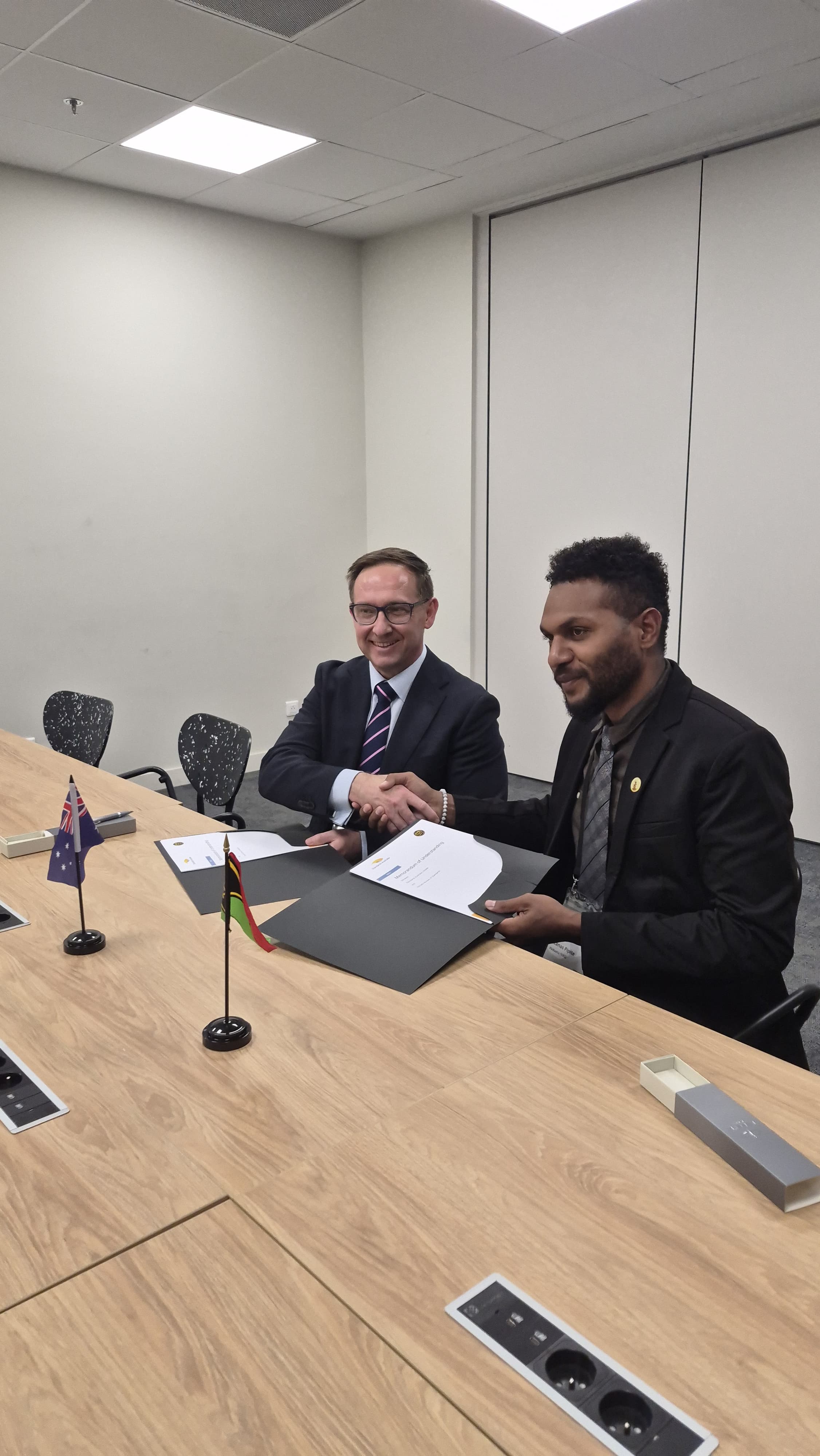
A major outcome of VBS's participation is the signing of a Memorandum of Understanding with Standards Australia, strengthening a longstanding relationship that has supported the development of standards in Vanuatu.

The partnership has contributed to building national technical capacity and promoting clearer, more consistent requirements for businesses. These efforts help create a fairer playing field for local producers and strengthen confidence in Vanuatu's products.

The agreement provides a platform for further cooperation on national priorities, including building code requirements, kava and timber standards, and other standards supporting trade and industry development. Work in these areas can improve product quality, support safer construction and help businesses understand and meet the requirements of their markets.

Turning standards into market opportunities

For Vanuatu, standards have a direct connection to economic opportunity. Farmers, processors and exporters need reliable systems that demonstrate the quality, safety and consistency of their products.

Vanuatu's developing export pathways to Australia illustrate the importance of this work. Standards, supported by testing, inspection, certification and compliance with biosecurity requirements, help producers meet buyer expectations and build confidence across the supply chain.

Closer cooperation with Standards Australia can strengthen this foundation by improving access to technical expertise and supporting the alignment of relevant national standards with international practice. This can help reduce unnecessary technical barriers to trade and give Vanuatu businesses a stronger basis on which to compete.

The benefits also extend to the domestic market, where consistent standards support consumer protection, fair competition and confidence in locally produced goods.

Preparing Vanuatu for the AI economy

Artificial intelligence and cybersecurity are prominent themes at the Paris meeting, alongside trade, development and environmental resilience. These discussions matter for small developing economies seeking to benefit from technological change.

The World Bank's World Development Report 2026: The Promise of Artificial Intelligence recommends an "adopt, adapt, and advance" approach. It places particular emphasis on adapting existing AI tools to local languages, institutions, data and development needs, while progressively strengthening skills and infrastructure. The report also identifies voluntary standards as a starting point for trustworthy AI governance.

For Vanuatu, this offers a practical direction: use available technology, adapt it to national realities and build the capacity to innovate. Potential applications include agricultural advice, product traceability, access to standards information and more efficient public services.

Standards can help guide these opportunities by supporting reliable systems, responsible data use and confidence in new technologies. Participation in international discussions gives Vanuatu an opportunity to contribute its needs and learn from partners as these frameworks develop.

Bringing international cooperation home

VBS's participation in Paris connects global discussions with practical priorities at home: stronger export pathways, safer buildings, improved product standards and greater readiness for technological change.

The MoU with Standards Australia marks a further step in that work. By building on established cooperation and focusing on national needs, Vanuatu can strengthen the systems that help its producers compete, protect its consumers and turn innovation into wider economic opportunity.

Sources

For more information, contact:
Vanuatu Bureau of Standards (VBS) · P.O Box 6532, Port Vila · +678 25978

ISO Standards Australia MoU Trade AI Consumer Protection

Vanuatu Strengthen Regional Quality Infrastructure Through PQII

Vanuatu Continues to Strengthen Regional Quality Infrastructure Through PQII

Port Vila, Vanuatu — The Vanuatu Bureau of Standards (VBS) is pleased to share the latest issue of the Pacific Quality Infrastructure Initiative (PQII) Newsletter, covering key regional developments in standards, metrology, and testing from April to June 2026.

As Vanuatu's official focal point for all three PQII regional committees — the Pacific Islands Standards Committee (PISC), the Pacific Islands Testing Committee (PITC), and the Pacific Islands Metrology Committee (PIMC) — VBS continues to represent Vanuatu's interests across each pillar of regional Quality Infrastructure.

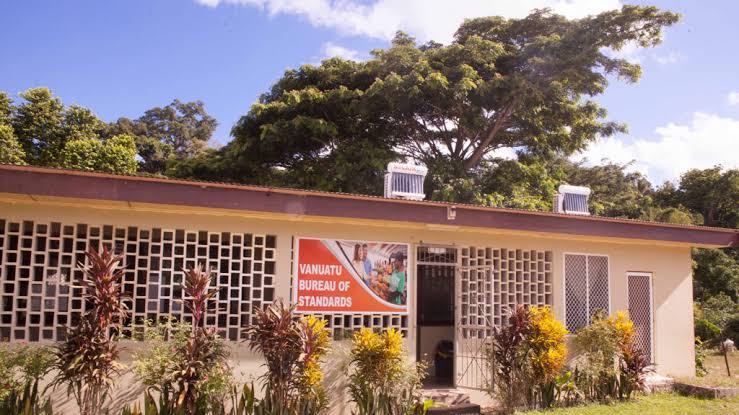
VBS Laboratory in Port Vila
The VBS Laboratory in Port Vila provides essential testing and calibration services, supporting regional quality infrastructure development.

🔵 STANDARDS

The 13th Pacific Islands Standards Committee (PISC) meeting was held on 28 May 2026, bringing together focal points from 11 Forum Member Countries to advance regional priorities, including engagement with ISO, IEC, and ASTM.

Buildings and Construction (TC1): Continued work on a regional standard for Energy Efficiency of Buildings, setting minimum requirements for assessing and calculating energy efficiency for any building constructed or renovated in the Pacific region.

Food and Food Products (TC2): Progressed the regional standard for Quick-Frozen Cassava, incorporating over 50 public comments received on the draft — bringing the standard close to completion.

Kava (TC3): A new Technical Committee on Kava was formally established, with its inaugural meeting held in Sydney from 20–22 April 2026, hosted with funding support from Standards Australia. Given kava's importance to Vanuatu's export economy, this work is central to ensuring quality, consistency, and consumer confidence for Pacific kava on international markets.


🟢 METROLOGY

Legal Metrology Training: A two-week attachment training programme for legal metrology inspectors from Tonga and Papua New Guinea was completed in May 2026 at the Trading Standards laboratory in Auckland, focused on the verification of weighing scales and fuel meters.

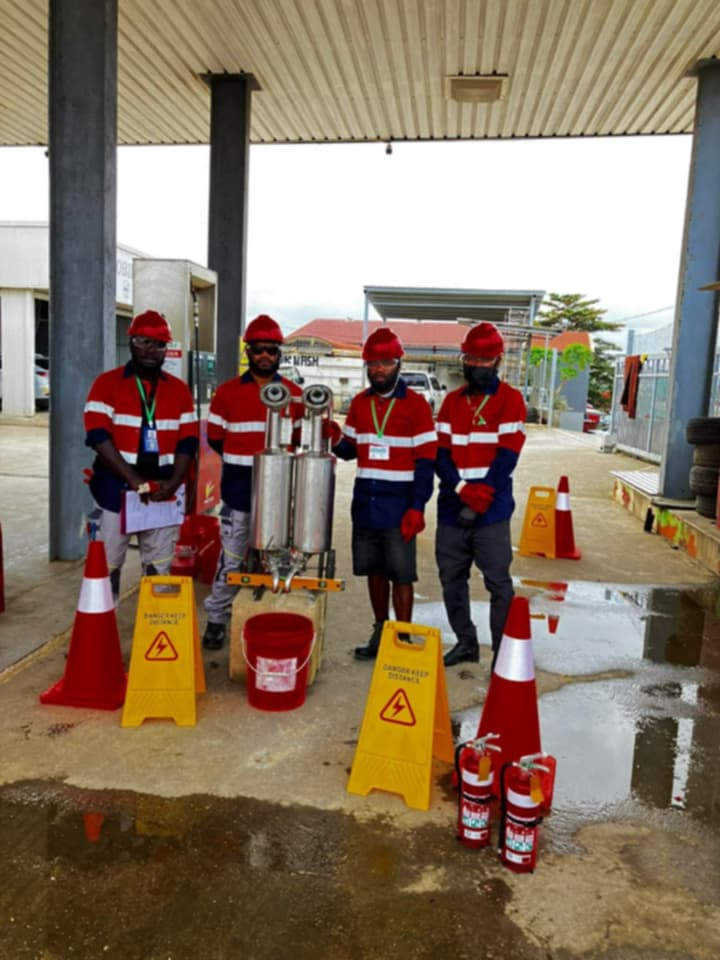
VBS Inspector with Fuel Dispenser
A VBS inspector conducts a fuel dispenser verification using new high-accuracy equipment provided through the PQII legal metrology programme.

New Equipment in Vanuatu: Vanuatu was among six Pacific nations — alongside Tonga, Papua New Guinea, Solomon Islands, Kiribati, and Samoa — to receive new high-accuracy fuel measurement equipment. The new fuel provers dramatically reduce verification time for fuel dispensers, supporting faster regulatory checks and greater consumer confidence at the pump.

Regional Model Metrology Legislation: A draft Regional Model Metrology Legislation has been developed to modernise outdated measurement laws, aligning with the OIML D1 document, with support from the European Union and UNIDO.


🟠 TESTING

Regional Laboratory Development: A comprehensive laboratory development assistance plan has been prepared, drawing on assessments of laboratories in Fiji, Solomon Islands, Samoa, the Federated States of Micronesia, and Papua New Guinea, in collaboration with UNIDO.

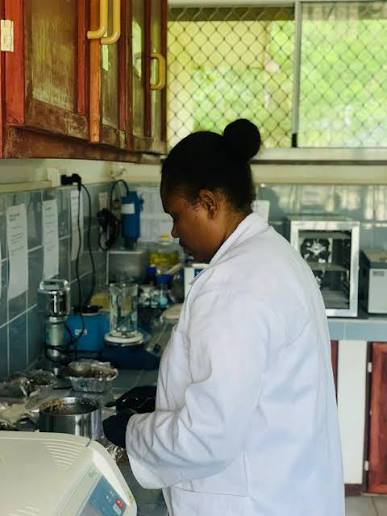
VBS Technician in Laboratory
A VBS technician at work in the laboratory, demonstrating the technical capacity being built to support regional testing and conformity assessment.

Kava Proficiency Testing: A second Proficiency Testing report on kava has been delivered, designed to enhance laboratory performance and testing reliability, and to support the development of regional kava standards.

Training Resources: Two self-paced virtual training courses on laboratory management have been developed for inclusion on the forthcoming Pacific Quality Infrastructure Portal, providing accessible capacity-building for laboratory professionals across the region.


Vanuatu's Continued Engagement

VBS remains committed to ensuring Vanuatu's voice is heard as the Pacific region moves into Phase 3 (2026–2030) of the PQII programme, playing a vital role in advancing conformity assessment and quality infrastructure initiatives for Vanuatu.

Read the full PQII Newsletter Issue No. 1/2026–27 here.


For more information on VBS's role in the Pacific Quality Infrastructure Initiative, contact the Standards and Certification Section, Vanuatu Bureau of Standards, Ministry of Trade and Commerce.

Sample Delivery

Sample Delivery Process

  1. Upon delivery of sample, make sure that your sample packaging is labelled correctly with the correct:
    • Client Name
    • Sample Name / Code (will appear on the Certificate of Analysis)
    • Date of Delivery
  2. Sample must be well packaged/covered to avoid cross contamination.
  3. Make sure to complete an Analysis Request Form (ARF) in the sample dropbox (ask for assistance if you need one).
  4. Completing an ARF:
    • Please note that one ARF per sample.
    • Complete the top part with your (client) information. Provide a phone number and email address so that we can send you updates on the analysis of your sample and invoice.
    • Complete the following boxes:
      1. Tick the type of service you require: Testing (if you want your sample tested), Sampling (if you want your samples collected at your premises).
      2. Method of Delivery: (By Hand, By Air, By Boat, etc.)
      3. Sample Type: (Powdered, Grains, Liquid, etc.)
      4. Client Sample Code: (Name of Sample as you want it to appear on the result)
      5. Sample Urgency Detail: Tick a box to confirm urgency details of sample to be analyzed, whether it is urgent or normal turnaround time. If urgent, complete next box with turnaround date and time.
      6. Test Method(s) requested: Name of test(s) that will be used to analyze your sample. List of test methods and prices available upon request.
    • The rest of the boxes on the ARF will be completed and signed off by a VBSLS staff ONLY.
  5. The completed ARF will then be taken to the Lab along with your sample for analysis.

NOTE: We will inform you once your sample has been analyzed and an invoice will be sent to you. The Certificate of Analysis (CoA) / Test Result will be made available to you only once payment is sorted.

Thank you,

Services

Laboratory Services

1. Laboratory Testing

VBS Laboratory provides laboratory services to local farmers for both local consumers and export purposes in terms of testing.

Testing is the process in which samples are analyzed in a controlled environment using scientific methods with specialized equipment to assess food safety, quality, and composition according to industry standards and health regulations.

Why Laboratory Testing?

  • To ensure food safety
  • Verify nutritional content
  • Prevent contamination
  • Support product development

Common Types of Testing in the Laboratory

  • Chemical testing
  • Microbiological testing
  • Nutritional analysis
  • Shelf-life testing
  • Food science testing

Food testing helps protect people’s health, build consumer trust, and ensure that product quality is consistent.

2. Product Development

Product development is the process of creating a new product or improving an existing one to suit or meet customer needs, export standards, or local market demands. VBS assists in testing products and provides information on how to develop them.

3. Metrology

VBS Laboratory also provides metrology services such as calibration of instruments to ensure that the instruments are accurate and provide reliable measurements.

4. Inspection

VBS Laboratory plays an important role through inspections in warehouses, as well as in conformity assessments and product testing.

Vacancies

National Partners

Trade, Quality & Infrastructure

Sectors & Production

National Packhouse Programme

⚠️ Beware of fake websites pretending to be official. Always check the domain carefully as official Vanuatu Government sites end with .gov.vu.